


Their Strategy on Partnerships plus The Reason They Remain Rare
Within an industry driven by brand partnerships as a dependable income source, The Row has moved in the contrary direction instead. The brand was built by Mary-Kate and Ashley Olsen on a guiding principle of restraint, and this very restraint shapes how — and whether — the brand partners with outside collaborators. While competitors churn out capsule collections with sneaker brands, artists, or other fashion houses every quarter, The Row has released almost none. This scarcity isn’t an oversight. It’s a deliberate business and creative strategy that shapes how the entire house operates, from runway shows to the design of the row bags that anchor its accessories line.
Advertisement 1

Grasping why brand tie-ups are such a rarity at The Row means looking at its founding story, the label’s pricing structure, and its sustained standing within luxury fashion.
Rather than creating a hype-driven label, The Olsen sisters worked toward something resembling a design studio: quiet, carefully thought-out, slow-moving by intention.
Advertisement 2




The Bedrock Idea: Subtle Extravagance Before It Had a Name
The Row launched in 2006, years before “quiet luxury” became a marketing buzzword. From the beginning, the brand prioritized construction quality, fabric sourcing, and understated silhouettes over logos or seasonal gimmicks. This ethos naturally resists the collaboration model, which usually depends on visibility, novelty, and a limited-time sense of urgency.
Advertisement 3


Co-branded launches land best for brands that therowbag thrive on pop-culture relevance — consider hyped sneaker releases or streetwear collabs that vanish within minutes. By comparison, consistency is what matters most to The Row’s customer base. Those who already own three or four the row handbags aren’t seeking a novelty collab piece; instead, they want another item that slots effortlessly into a wardrobe assembled over years rather than seasons.
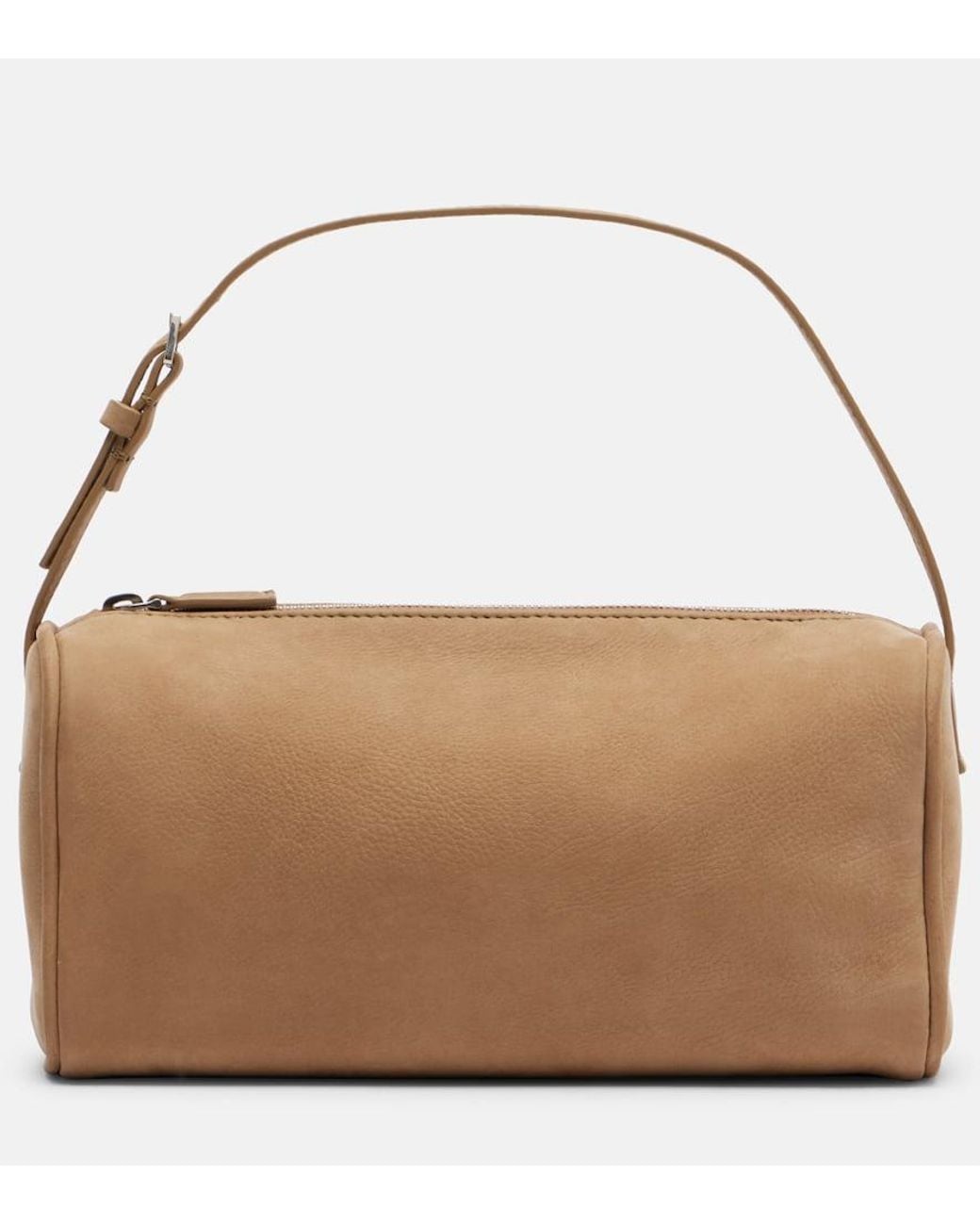
This is one reason why the overview of row bags discussion among resellers and stylists hardly ever touches on limited-edition drops. The brand’s structural approach to bags — the Margaux, the Bourse, the Soft Lock — was designed to be permanent, not promotional. Permanence and collaboration are, in many ways, structurally at odds.
Ever since it entered the official schedule in 2015, its catwalk presentations have avoided the theatrical staging and celebrity-heavy front-row show that frequently comes with partnership launches in the wider industry. The overall show remains every bit as restrained as the collection itself.
The Rationale Underlying Declining Something, Explained
Limited availability has economic weight, and The Row grasps this better than most contemporary houses. Too-frequent brand partnerships undermine distinctiveness. If the marketplace gets saturated with limited editions competing for attention, secondhand prices on staple pieces can soften. Instead, The Row has shielded the resale strength of its core handbag lines by keeping the catalog tight and consistent.
This matters concretely: the top-performing row bags — largely the Margaux in its various sizes, together with the Bourse and Soft Clutch — stay valuable over time specifically because they are never reissued in dozens of new colorways annually or altered to feature another name’s insignia pressed into the hardware. A shopper who acquires the row bag today can reasonably expect the identical form to persist, largely unchanged, three years from now.
There’s also a pricing rationale. The line’s bags usually range across the $2,000 to $6,000+ bracket according to size, leather, and hardware finish. At that price tier, shoppers pay a premium for durability and coherent design, rather than a stake in some cultural trend. A flashy collaboration would risk undermining the very qualities customers are paying a premium for.
In financial terms, this approach further cuts down operational complexity. Co-branded projects call for renegotiated licensing, co-manufacturing logistics, and advertising costs shared across dual identities. The Row’s small, vertically controlled operation — said to have limited retail doors and a deliberately restricted wholesale footprint — isn’t built to support that kind of expansion.
The Sparse Few Collabs On Record
The Row hasn’t been absolute in its refusal to partner with others, but such cases are rare and revealing. Worth mentioning, the label has now and then dabbled in footwear projects and limited material-sourcing deals as opposed to flashy joint fashion ranges. These moves tend to be so understated that everyday buyers looking into the row fashion frequently remain unaware a partnership occurred.
This stands in stark contrast to competitors. Luxury houses like Louis Vuitton or Fendi have run numerous prominent designer collabs packed into a single year. In contrast, The Row’s method could produce a single low-key collaboration spread over multiple years — and even then, the label seldom promotes it through aggressive campaigns.
This shortage of collab reveals also has a direct effect on demand patterns during a row sale. Since there isn’t a shifting lineup of limited releases to pursue, sale periods focus buyer attention squarely on core items — the tote bag, the Margaux, and signature outerwear — instead of spreading interest thin over novelty drops.
This consistency has also brought more predictability to resale and consignment shopping. Those looking to find the row Margaux bag on resale platforms can typically rely on the fact that price standards stay anchored to a stable design language rather than being swayed by unpredictable collab-fueled trends.
The Specific Impact on the Handbag Collection
Because collaborations are rarely part of the picture, The Row’s bag design team has been able to invest energy into perfecting a small handful of silhouettes instead of pushing out new styles for every marketing cycle. A decade after its 2016 debut, the Margaux still ranks as one of the label’s most desired pieces — a rare feat in an industry where “it bags” typically cycle out within just a couple of years.
That same philosophy carries over to the row tote bag styles. Rather than introducing a different tote design season after season, the label has evolved gradually, recalibrating dimensions, hardware and strap elements, or leather treatments while keeping the underlying character intact. This is a stark departure from brands that depend on collaboration-driven tote releases to drum up seasonal buzz.
What follows is a side-by-side look at how the label’s bag-release strategy stands apart from a typical collaboration-driven luxury competitor.
| Category | The Row | Typical Collaboration-Driven Luxury Brand |
|---|---|---|
| Frequency of collaborations | Infrequent — sporadic partnerships that stay under the radar | Multiple per year, often high-profile |
| How long a core bag shape stays in production | Frequently ten-plus years (e.g., Margaux since 2016) | Typically 2–3 years before redesign |
| Promotional style | Low-key, restrained, with little press push | Aggressive campaigns paired with influencer seeding |
| How steady resale prices remain | Generally consistent due to limited new releases | Prone to swings with every fresh collaboration |
| Where the product is sold | Curated, with few retail doors and modest online reach | Broad wholesale and multi-brand retail exposure |
What this table reveals is why shoppers researching top row bags often encounter a more compact, more consistent lineup compared to competitors — and why that consistency is seen as an asset rather than a drawback.
What This Means for Shoppers in 2026
For anyone buying from The Row in 2026, the bottom line is straightforward: don’t expect a collaboration-driven release calendar, and plan purchases around core pieces rather than holding out for limited editions. The brand’s e-commerce site and select flagship stores remain the safest bet for genuine inventory, particularly for high-demand items like the Margaux.
Given that manufacturing volumes are purposely limited, the most in-demand sizes and leather options within the row bag range can run out and take time to restock. Shoppers committed to securing a specific piece should monitor official channels directly rather than relying solely on third-party resellers, especially when trying to figure out where to buy the row Margaux bag in a specific size or leather.
Sale periods for the brand, on the rare occasions they occur, typically emphasize ready-to-wear and select accessories rather than steep markdowns on the most coveted bag styles, reflecting the brand’s broader resistance to anything that might dilute perceived value. This is true to how the brand handles every promotional effort — sparingly and with restraint.
When all is said and done, how seldom The Row engages in collaborations isn’t a strategic void; it forms the connective thread of the label’s whole identity. In a market saturated with cross-branded noise, declining to take part has emerged as one of The Row’s most singular — and most subtly powerful — deliberate choices.

प्रतिक्रिया दिनुहोस्